Dense, silky, and deeply savory. The fat sits inside the muscle, so the breast stays juicy after a full roast. The dark meat runs deep but never gamey. The skin crisps thin and glassy. The texture is what surprises people first: this is chicken with some structure to it.
What hits you first?
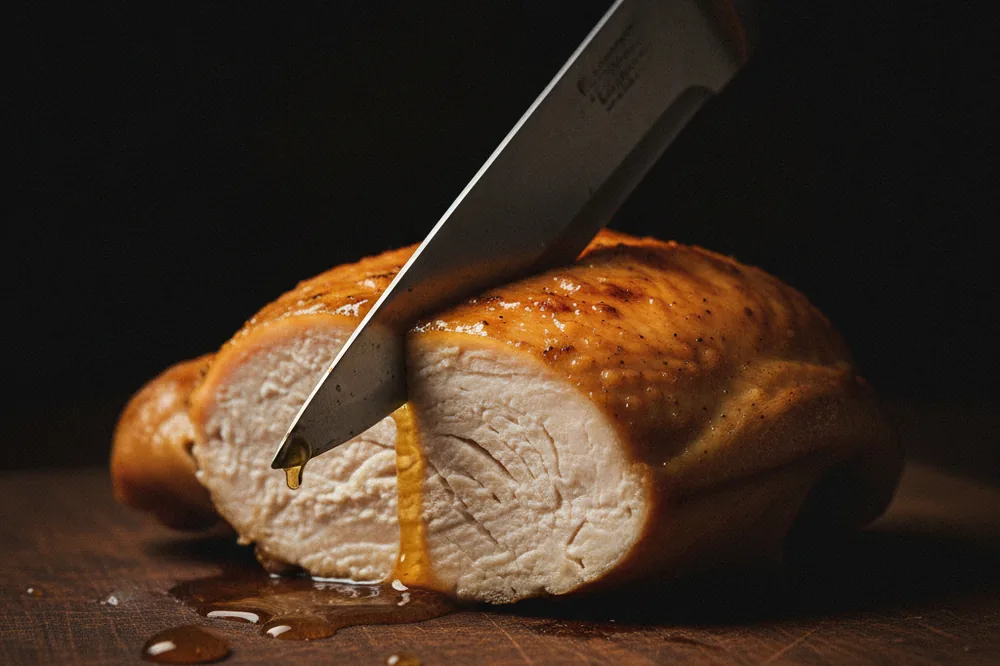
Texture, before flavor. A finished Bresse breast has structure: the knife meets gentle resistance, the slice holds its shape, and the bite is dense and silky at once. Store chicken never manages that, because store chicken is bred soft. This muscle worked on pasture for sixteen-plus weeks, then fat wove into it during finishing.
Then the flavor arrives, and the right word is concentrated, not exotic or gamey. It is chicken, turned up and rounded out. The savory depth keeps going after the swallow. First-time tasters say the same thing: "So this is what chicken is supposed to taste like." The marbling does that. Fat inside the meat carries flavor, the same way it does in a good steak.
The plainest test settles it. Roast a Bresse and a store bird on the same day, same oven, salt only, and serve the slices unlabeled. The Bresse plate empties first. In network kitchens that test has never gone the other way.
How does it compare to supermarket chicken?
They are different foods wearing the same name. The store bird is a broiler processed at six to eight weeks. It is young, mild, and neutral on purpose. Its job is to be cheap, and its moisture is mostly water, where a Bresse's moisture is fat. That one swap explains most of the difference: water cooks out and leaves the meat hollow, while fat renders and leaves it rich.
Side by side, the store breast is pale, soft, and mild while the Bresse breast is blushing, firm, and full of flavor. The store dark meat tastes like its seasoning; the Bresse thigh tastes like itself. Even the drippings differ: cloudy water in one pan, golden fat worth saving in the other. None of this insults the grocery bird. It wins on price every week. It just loses on flavor.
Will my first roast live up to these notes? What am I missing if it doesn't? Get Your Answers Live at the Weekly Coffee Hour Q&A.
Join the call on Monday (Free)How does it compare to a home-raised Cornish Cross?
Closer, and the fair answer respects the CX. A pastured, well-raised Cornish Cross beats any store bird. The flavor is cleaner and the fat is better. Many Bresse keepers raised CX first and learned solid skills doing it.
But the Cornish Cross cannot marble. Its fat sits under the skin and around the cavity, never inside the muscle. So the meat stays mild and soft, no matter how good the pasture was. The ceiling is genetic, and management cannot raise it. The CX also lives against a clock: bred to reach weight at six to eight weeks, it must be processed on schedule, and birds held past their window risk dying of heart failure. The Bresse runs the opposite program, slower and marbled from the inside. Either bird can fit your kitchen. Only one makes the finer plate.
What do the tasting notes look like, part by part?
Here is the same bird, read piece by piece. It sits next to the two birds most kitchens know:
| On the plate | American Bresse | Supermarket bird | Home-raised CX |
|---|---|---|---|
| Breast | Dense, silky, self-basting; moist after a full roast | Soft, watery, drying at the edges | Tender and mild; better than store, still soft |
| Dark meat | Deep, savory, almost confit-rich | Faint; carries sauce, not itself | Pleasant, noticeably milder |
| Skin | Thin; crisps glassy; renders clean | Thick, often flabby | Good crisp with attentive cooking |
| Fat | Golden, abundant, worth saving by the jar | Scant, cloudy | Plentiful but under the skin only |
| The frame | Fine bones; stock turns deep and gelatinous | Soft bones, thin stock | Heavy frame, decent stock |
How should the taste change your cooking?
Cook it like the ingredient it is. Most chicken technique exists to hide blandness and survive dryness: heavy brines, hard spice, scorching heat. A marbled bird needs none of that rescue work, and some of it does harm. The principles are moderate heat, a good rest, and light seasoning, so the inside fat renders through the meat instead of seizing and the bird carries the plate on its own. The exact temperatures, times, and roasting routine live in the Field Guide chapters and the club.
Then use the whole bird. You raised it, or paid a farm's price for it. The saved fat can cook the rest of the week. The fine-boned frame makes stock with body. An older bird belongs in a braise or a poach: a retired layer, say, or a bird past the roasting window. The French built whole dishes around those birds, and matching the method to the bird's age is its own craft. When you want more than one roast out of the skill, the network's paid cutting and cooking guides at americanbressechickens.com are the next step. If you just need the bird itself, the breeder directory at AmericanBresse.com answers that.
Take the guide with you
This chapter lands in your inbox with the rest of the guide: all 6 chapters. Then the working emails start, one job at a time: the farm search, the price check, the first roast. They run until a marbled bird you raised or sourced yourself is on your own table.
Tasting questions, answered
Is American Bresse chicken gamey?
No. The dark meat runs deeper and more savory than store chicken. But it still reads as chicken, not game. The flavor comes from foraging and time. The marbling keeps it round and rich, not sharp.
Is the breast dry like other heritage-breed chicken?
No, and that is the breed's signature trick. Heritage breeds are old farm breeds that grow slowly, and their breasts often cook up dry. The Bresse breast carries fat inside the muscle. It bastes itself and stays juicy through a full roast. People remember the texture: dense and silky at once.
How different is it from supermarket chicken?
It is a different category. A store bird is a 6–8 week broiler. It is mild, soft, and watery by design, built for cost per pound. A finished Bresse is a 14–19 week bird with fat inside the muscle. It is denser under the knife and deeper on the palate. The skin crisps thin instead of flabby.
Does a home-raised Cornish Cross taste as good?
A pastured, home-raised Cornish Cross beats any store bird. It deserves respect. But it cannot marble. Its fat stays under the skin, so the meat itself stays mild and soft. The Bresse difference is inside the muscle. No feed or pasture can put fat where the genetics leave it out.
Do you cook American Bresse differently?
Yes. Cook it gently and with patience. Roast at a moderate heat instead of blasting it. Rest the bird well. Save every drop of fat. Use the bones for stock; the fine frame makes a rich one. Recipes written for watery store birds tend to overcook this one.