Cornish Cross is the cheap, fast bird: table weight in 6–8 weeks, mild and soft, fat only under the skin, and a hard processing deadline. American Bresse is the table bird: finished at 14–19 weeks, fat marbled inside the muscle, denser and deeper on the plate, no deadline, and a laying flock as a bonus. Pick the question first, then the bird.
Bresse vs Cornish Cross, row by row
Both birds put meat on the table, and both earn their place. But they answer opposite questions. A Cornish Cross is a production animal engineered for the lowest cost per pound in the fewest weeks. An American Bresse is a heritage table breed carried for centuries toward one thing: how it eats. Read the table with your own kitchen in mind.
| Trait | American Bresse | Cornish Cross |
|---|---|---|
| Weeks to table | 14–19, finished | 6–8 |
| Marbling | Yes — fat inside the muscle | None; fat under the skin only |
| Texture | Dense, silky, holds moisture through a full roast | Soft; watery if grown a touch long |
| Skin | Thin; crisps glassy, renders clean | Thicker, often flabby |
| Processing deadline | None. The schedule bends to you | Hard. Held over, birds risk heart failure |
| Also lays eggs? | Yes — 200–250 a year | No; not viable long-term |
| Cost per pound | Higher — 16-plus weeks of feed and care | Lowest of any meat bird |
| Built for | The plate | Cost per pound |
The why-it's-different guide pulls each of these rows apart in more depth. What follows here is the shorter, side-by-side read.
What the difference does on the plate
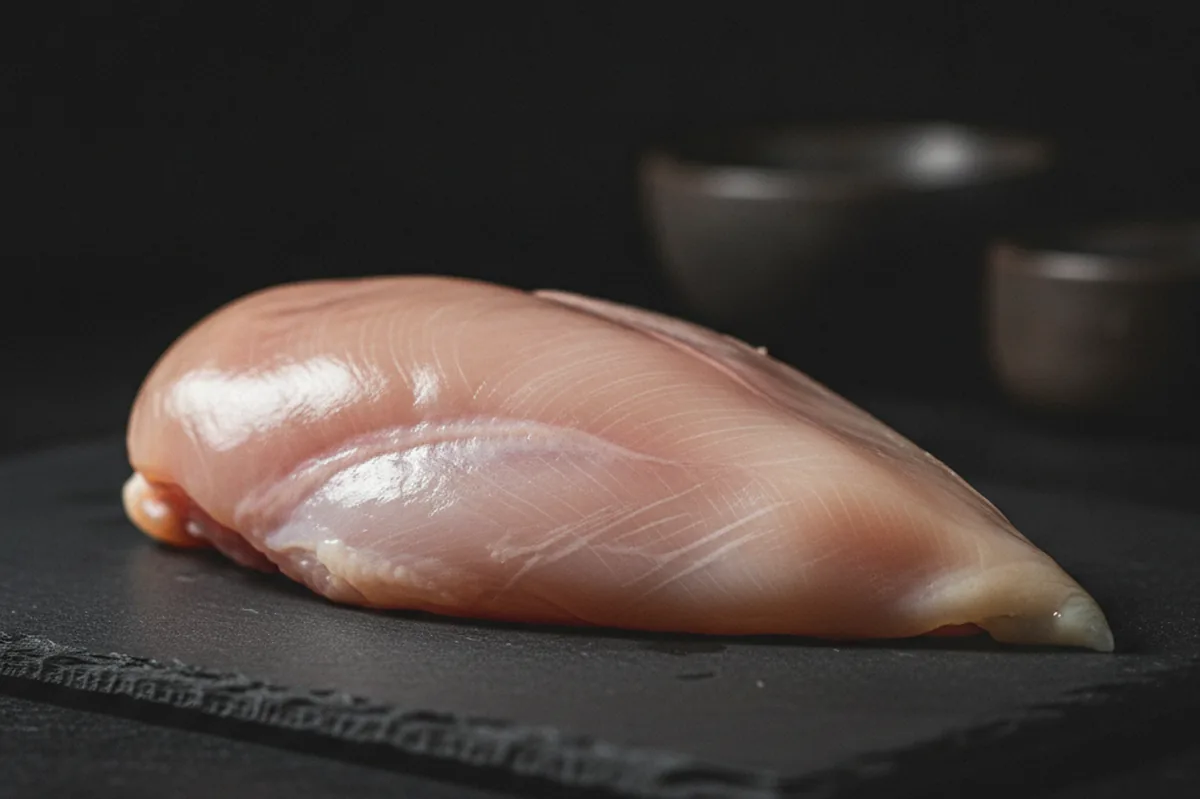
The Cornish Cross is a good bird, and a pastured, home-raised one beats anything in the meat case. Its meat is tender and clean. But its ceiling is mild. The fat sits under the skin, so the muscle itself never turns rich. A Bresse eats differently because it is built differently: the fat is in the meat. It bastes the breast from the inside through a full roast, and it carries flavor the way marbling carries it in a good steak. Why the Bresse marbles and the Cross can't is a genetics story the breed's hub tells in full at AmericanBresse.com; here we stay on the two birds side by side.
There is a fair trade behind that richness. The Bresse takes roughly three times the weeks, which means three times the feed and care per bird, and a higher cost per pound at the end. The Cross gives you cheap protein fast. The Bresse gives you the finer roast, slowly. Neither answer is wrong. The tasting notes describe the Bresse side, bite by bite.
Is Bresse worth the extra weeks over Cornish Cross? Which bird fits my table and my calendar? Get Your Answers Live at the Weekly Coffee Hour Q&A.
Join the call on Monday (Free)The deadline: the difference keepers feel most
Look hard at the deadline row, because it decides more first-time raisers than flavor does. A Cornish Cross grows so fast that its body outpaces its own heart. It must be processed inside its window, and held past it, birds start dying of heart attacks. Processing day arrives on the birds' schedule, not yours, and a rained-out weekend does not move it.
American Bresse keeps no such clock. It is an ordinary, athletic chicken, ready at 16 weeks and still fine at 19. Plan for one week, do it the next, and the meat is just as good. If your weekends are not your own, that certainty can be the whole decision. Plenty of keepers came to this breed after one too many forced processing days with broilers.
One bird lays, the other can't
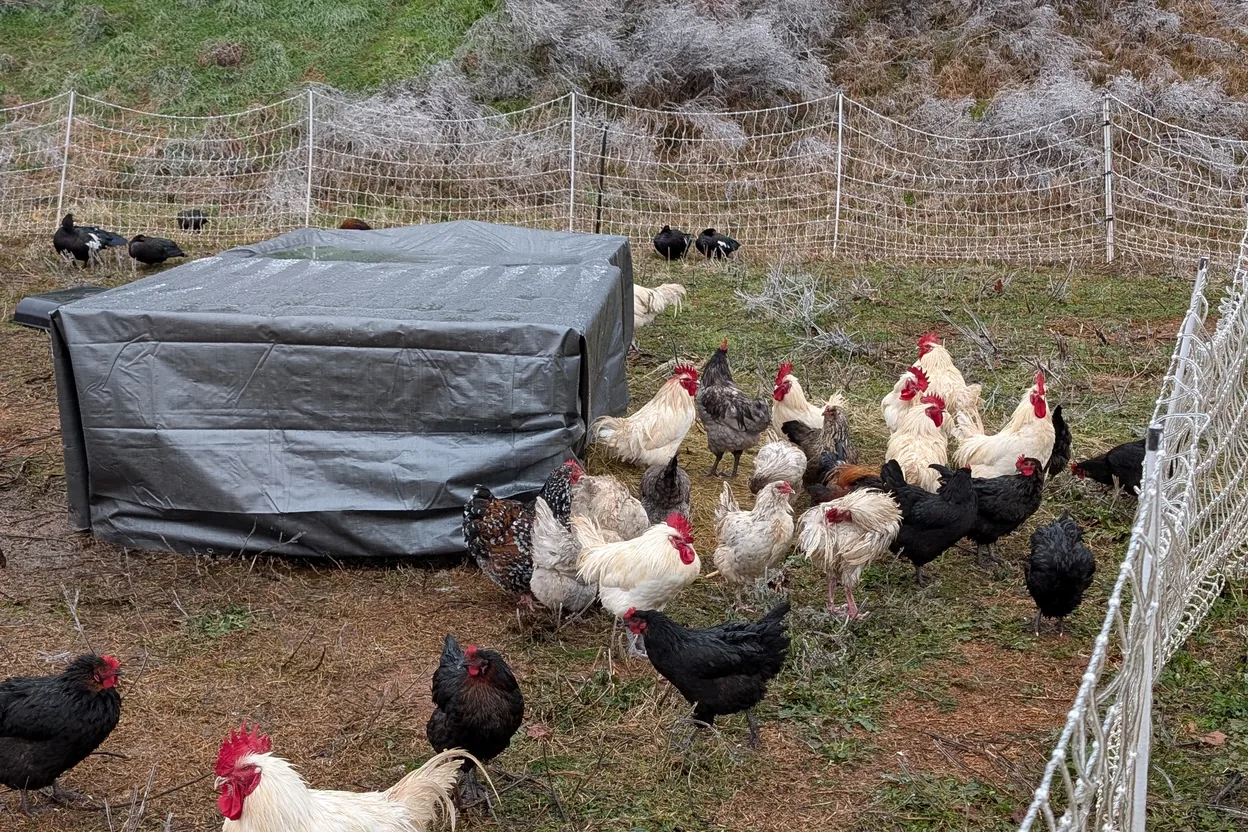
There is a difference that never shows on a plate but changes the whole math: the Bresse is dual-purpose. A straight-run box of Bresse chicks, unsorted by sex, gives you both halves of a flock. The cockerels grow out as table birds at 14–19 weeks; the hens settle into a laying flock at 200–250 eggs a year. One hatch, meat and eggs. A Cornish Cross is a terminal meat bird. It is not built to lay or to live long, so it answers one question only. If you want a flock that feeds you two ways from a single order, that is a solid point in the Bresse column. Where those chicks and started birds come from is its own page: where to buy Bresse chicken meat, and what the whole thing costs is on the Bresse meat price page.
Take the guide with you
This chapter lands in your inbox with the rest of the guide: all 6 chapters. Then the working emails start, one job at a time: the farm search, the price check, the first roast. They run until a marbled bird you raised or sourced yourself is on your own table.
Bresse vs Cornish Cross, answered
Is Bresse or Cornish Cross better meat?
Different jobs. Cornish Cross wins on cost per pound and speed, reaching table weight in 6–8 weeks with mild, soft meat. American Bresse wins on the plate: it finishes at 14–19 weeks with fat marbled inside the muscle, a denser texture, and deeper flavor. If price is the goal, the Cross. If the roast is the goal, the Bresse.
Does Cornish Cross meat marble like Bresse?
No. A Cornish Cross stores fat under the skin and around the cavity, never inside the muscle. American Bresse lays fat down between the muscle fibers, the way beef cattle do. That intramuscular fat is genetic; no pasture or feed can put it into a Cross that isn't built to carry it.
Why does Cornish Cross have a processing deadline and Bresse doesn't?
A Cornish Cross grows so fast its body outruns its own heart. Held past its 6–8 week window, birds start dying of heart failure, so processing day is fixed. American Bresse is a normal athletic chicken that finishes over 14–19 weeks; week 16 or week 19, it waits for you. There is no deadline that punishes a busy week.
Can Bresse lay eggs too, unlike Cornish Cross?
Yes. American Bresse is dual-purpose: the hens lay about 200–250 eggs a year while the cockerels grow out for the table. Cornish Cross is a terminal meat bird and is not viable as a long-term layer. A straight-run box of Bresse gives you table birds and a laying flock from one hatch.