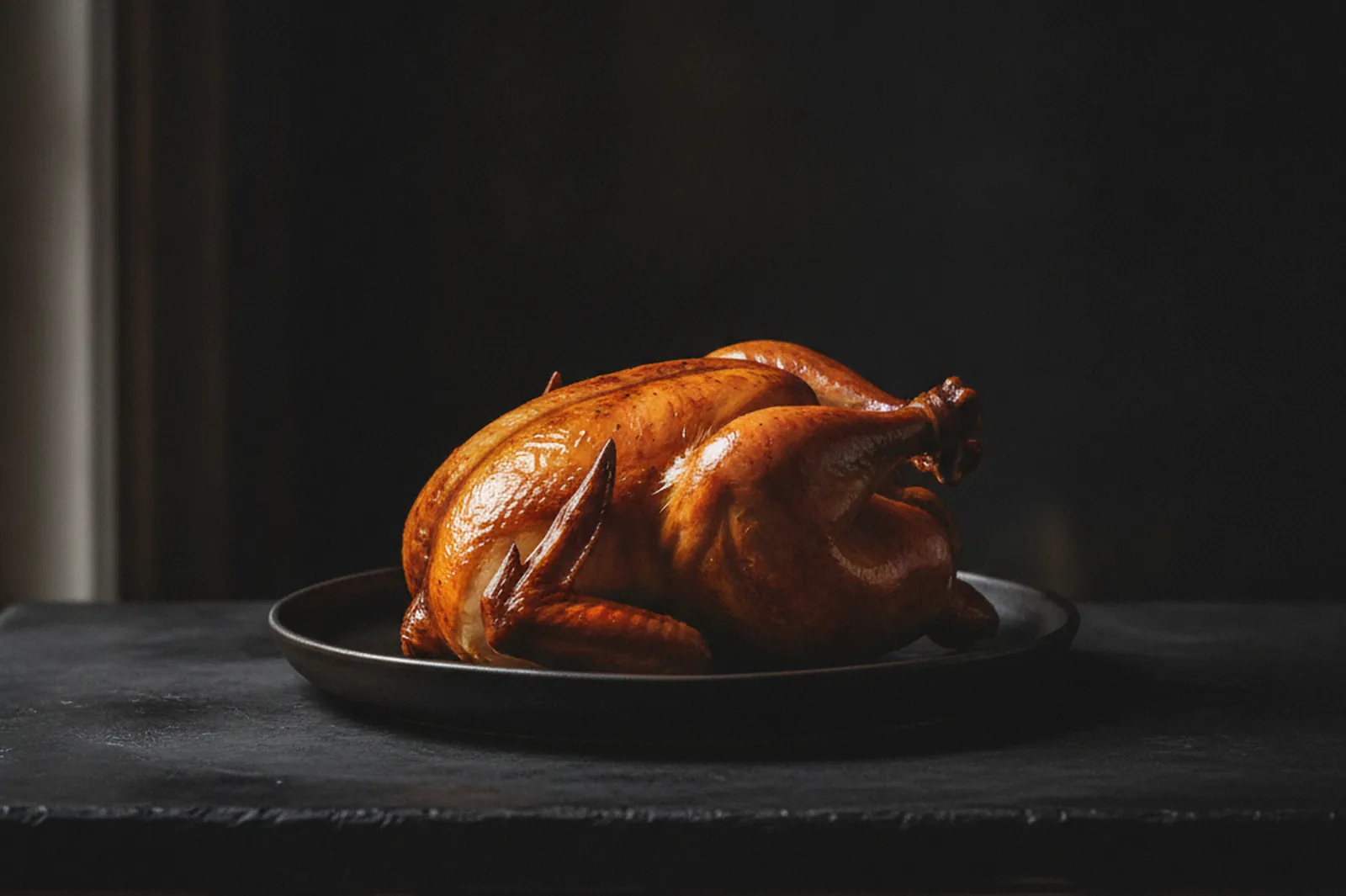
American Bresse meat is dense, silky, and rich, with fat that grows inside the muscle like marbling in good beef. No other chicken was bred for that. The breed comes from the famous poulet de Bresse of France, and birds reach the table at 14–19 weeks. Stores do not carry it. Most people who taste it raised it.
What makes American Bresse meat different?
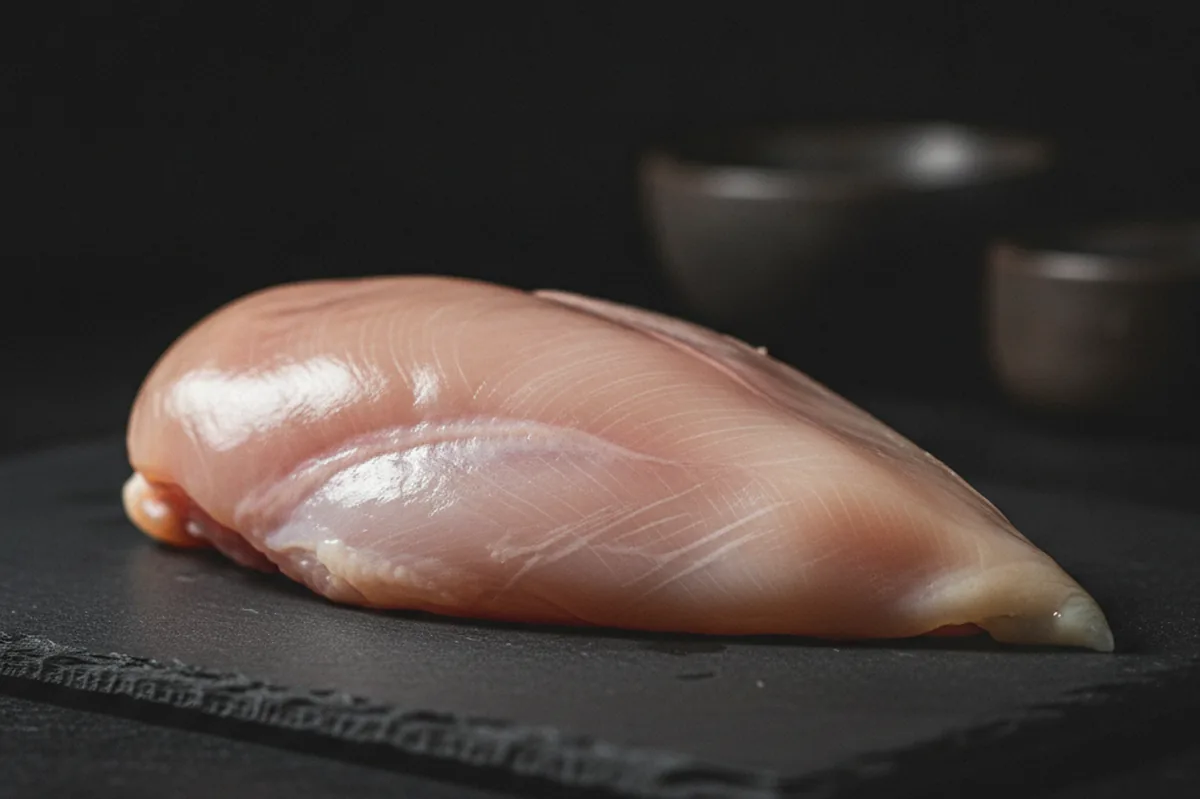
Two things you can see on a cutting board: fine bones and marbling. Marbling means fat inside the muscle, not just under the skin. Most chickens store fat under the skin and around the body cavity. Bresse-family birds also lay fat down between the muscle fibers, the way good beef does. That inside fat bastes the meat as it roasts, which is why the breast stays juicy through a full roast and why the flavor comes out rich instead of just seasoned.
The fine bones matter too. A Bresse frame is light for the meat it carries. More of the bird's weight is meat you can eat, the bird carves clean, and the bones left over make rich stock. No other breed was bred for this mix. Plenty of chickens were bred to grow fast or grow big. This one was bred, for centuries, to taste good. That is the whole claim, and the rest of this site backs it up.
Where does the reputation come from?
From Bresse, a region in eastern France. Its white chicken with slate-blue legs has led the French table for 400 years. In 1957, France gave poulet de Bresse the first AOC ever granted to poultry. An AOC is the legal badge France uses for Champagne and great wines. It locks the breed, the region, and the raising method into law. American Bresse is the same breed family raised on American soil: same genetics, same slate-blue legs, raised the French way without the French address.
"The queen of poultry, the poultry of kings." (Brillat-Savarin on the chicken of Bresse, 1825)
The method is simple to say: pasture first, then a rich finish, then rest. In France the method is protected by law; here it survives because breeders bother to do it right. The breed's American story and standards live at the breed's home, AmericanBresse.com.
How does a bird get from chick to this table?
It takes three stages over 14–19 weeks. Each stage does one job:
- Pasture builds the base flavor. Young birds range hard for bugs and greens. Exercise builds firm muscle. Varied forage builds depth of flavor.
- Finishing builds the marbling. Finishing is the last stage before the table, the final 2 to 4 weeks counted back from the process date. The feed gets richer. The pen gets calmer. Extra energy turns to fat inside the muscle.
- Rest sets the texture. Finished birds are handled calmly and processed with care. Then the meat rests before cooking. That old French habit lets the texture set.
Every stage trades time for quality, which is the one trade a meat case cannot afford. At three times a broiler's weeks, the math only works for someone raising the bird for their own table.
How does it compare to other chickens you could raise?
Each bird below answers a different need: cost per pound, patience and eggs, or flavor. Decide which question you are asking before you pick a bird.
| Trait | American Bresse | Cornish Cross / Rangers | Plymouth Rock / Orpington |
|---|---|---|---|
| Weeks to table | 14–19, finished | 6–8 (Rangers ~11) | 24–30 |
| Marbling | Yes, inside the muscle | None; fat under skin | Rare, breed-dependent |
| Texture | Dense, silky, holds moisture | Soft; watery if overgrown | Firm, can turn stringy with age |
| Processing deadline | None. The schedule bends to you | Hard deadline; held over, birds risk heart failure | None, but the wait is long |
| Also lays? | Yes, 200–250 eggs/yr | Not viable long-term | Yes, usually fewer |
| Optimized for | The fork | Cost per pound | Homestead patience |
The deadline row deserves a second look. A Cornish Cross batch must be processed on schedule; hold the birds past their window and some start dying of heart attacks. American Bresse has no clock. Week 16 or week 19, the bird waits for you. The why-it's-different guide takes that thread further.
Can you buy American Bresse meat?
Rarely. Small farms raise table-ready birds in small batches. Waitlists claim most of them before processing day. Nothing is sold on this site. In France, AOC poulet de Bresse sells for several times the price of plain chicken. The American bird earns a premium too. Each one takes 16-plus weeks of feed and care.
Which is how most people end up raising their own. Start with a straight-run box of chicks. Straight-run means the chicks are not sorted by sex. The males become table birds at 14–19 weeks. The females become a laying flock at 200–250 eggs a year. Chicks, hatching eggs, and started birds come from independent breeders. The national directory at AmericanBresse.com lists them state by state. The tasting notes describe the flavor, bite by bite.
Take the guide with you
The whole guide lands in your inbox: all 6 chapters. Then the working emails start, one job at a time: the farm search, the price check, the first roast. They run until a marbled bird you raised or sourced yourself is on your own table.
For chefs and kitchens
Chefs ask if they can source this bird for service. In small numbers, yes. American Bresse is a small-farm supply. Batches are seasonal, and most birds finish in fall. There is no wholesale pipeline. Every bird that reaches a menu came from a direct deal with a farm.
That deal starts at the national directory; serious kitchen inquiries travel fast there. Tell the farm what you need. Head count, dressed weight, and the week you need them. Book a season ahead for a set menu. For a special, the farm's next processing date may be enough. The bird rewards the trouble. Marbled chicken changes what a roast course can be.
Table questions, answered
What does American Bresse chicken taste like?
Dense, silky, and deeply savory. The fat sits inside the muscle, so the breast stays juicy through a full roast. The dark meat runs deeper than any store bird. The texture is the first surprise for most people.
Why is Bresse considered the finest table chicken?
Three reasons. The genetics marble. The fine bones raise the share of meat on the bird. The slow pasture-then-finish method builds flavor over 14–19 weeks. France thought the original was worth protecting like Champagne. It gave Bresse the first poultry AOC in 1957.
How long does it take to raise an American Bresse for the table?
14–19 weeks from hatch to a finished bird. That is about three times a store broiler's timeline. The birds forage hard through the middle weeks. Finishing fills the last 2 to 4 weeks before the process date. That stage builds the marbling.
Can I buy American Bresse meat in the United States?
Sometimes, from small farms. Supply is thin, and waitlists claim most of it. Most people who taste this meat raised it themselves. The national directory at AmericanBresse.com lists independent breeders with chicks and breeding stock. Nothing is sold on this site.
Is American Bresse the same as poulet de Bresse?
Same breed family, different soil. The name poulet de Bresse belongs by law to birds raised in the Bresse region of France. American Bresse carries the same genetics and the same slate-blue legs. It is raised in the French way on American pasture.
How is American Bresse different from Cornish Cross?
Cornish Cross is built for cost per pound. It reaches table weight in 6–8 weeks. The flavor is mild and the texture is soft. It also has a hard deadline. Held past schedule, the birds risk heart attacks. American Bresse takes 14–19 weeks, marbles from the inside, and has no deadline.