Three things set it apart. The genetics put fat inside the muscle; no other chicken family was bred for that. The bird gets time: 14–19 weeks on pasture instead of a broiler's 6–8. And the French finishing stage, the last 2 to 4 weeks before the process date. And a fourth: there is no processing deadline.
What do the genetics do?
They change where the fat goes. In chicken, that is nearly everything. Standard poultry genetics send extra energy to fat under the skin and around the body cavity. That fat helps the bird but not the fork. Most of it is thrown away at the cutting board. Bresse-family genetics carry a rare trait. They lay fat down between the muscle fibers. Beef people call it marbling, and they would know it on sight.
That trait took centuries of breeding in one direction. Most breeds were picked for eggs, hardiness, or fast growth. The white chicken of Bresse was picked, hatch after hatch, for how it ate. It is the only breed family bred first for marbling. Every American Bresse chick carries the trait; the method brings it out. The same breeding also gave fine bone, so a light frame carries a high share of meat. The trait alone is only a starting point, though. Time and finishing do the rest.
Why does slower growth mean more flavor?
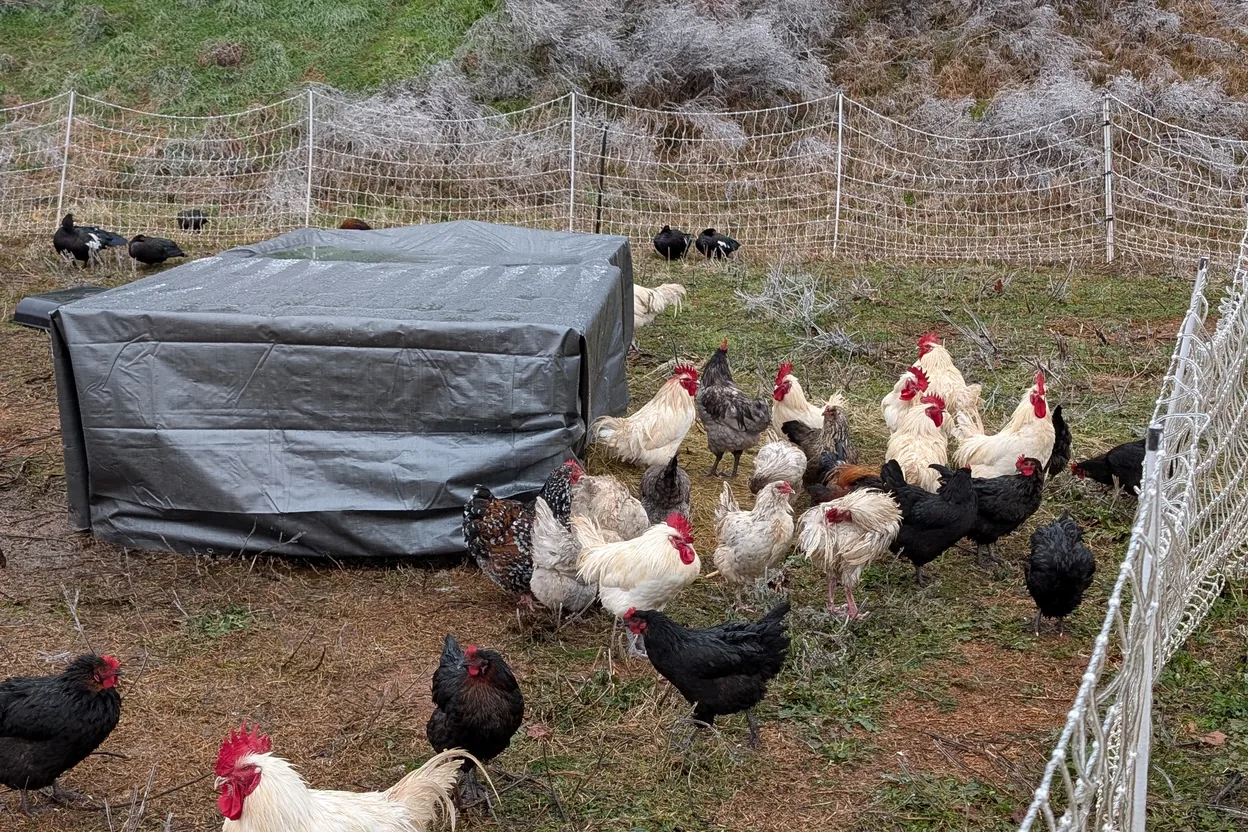
Because a six-week bird has barely lived. The compounds that read as depth build with age, exercise, and a varied diet. A store broiler is processed at 6–8 weeks. It is built to skip all that building. It turns feed into mass at amazing speed, and it tastes like the hurry. An American Bresse gets 14–19 weeks, and spends most of them ranging hard on pasture. It hunts bugs, works fence lines, and builds working muscle.
The exercise matters as much as the calendar. Worked muscle grows dense and savory where penned muscle stays pale and bland, and you can see the difference on one cutting board. The cost lives here too: three times the weeks means three times the feed and care per bird. France decided that trade was worth it 400 years ago and wrote it into law in 1957. Most people who carve both birds agree.
Will the marbling really show up on a bird I raise? What makes this chicken worth 14–19 weeks? Get Your Answers Live at the Weekly Coffee Hour Q&A.
Join the call on Monday (Free)What is the finishing tradition?
It is the last stage, and it turns the marbling trait into marbling. For most of its life, a Bresse is an athlete. In the last weeks, it becomes a boarder. The feed gets richer while activity narrows, and extra energy finally beats what ranging burns. That extra weaves into the muscle as fat. The start is counted back from the process date, 2 to 4 weeks out, anywhere in the 14–19 week window. Keepers judge each bird by hand, not by calendar.
The supermarket supply chain could never copy this stage, because it is craftwork: small pens, bird-by-bird attention, a keeper deciding when each one is done. Pasture builds the flavor, finishing builds the texture and the richness, and rest after processing sets both. Skip the finish and you still get a good chicken. You just do not get the one the AOC was made to protect. The network teaches the rest, and the breed's home at AmericanBresse.com is where that path starts.
Why does "no deadline" matter so much?
Because the fast meat birds punish you for having a life. Cornish Cross, and to a lesser degree the Rangers, are bred to reach weight on a schedule. Their own bodies enforce it. Hold a batch past its window and birds start dying of heart attacks. Their growth outruns their hearts. A work crunch or a rained-out weekend changes nothing for the CX.
American Bresse has no such clock. It is a normal, athletic chicken that happens to finish beautifully, ready at 16 weeks and still fine at 19. Nothing bad happens if the date slides. Plan for week 16, do it at week 18, and the meat is just as good. That certainty is worth more than it sounds, because it turns processing day from an emergency into a choice.
It also changes who can raise their own meat. The fast birds demand a clear calendar in the exact weeks they pick. This breed only asks that you get there. For a family juggling work, school, and weather, that is the whole game. Many keepers who started with fast broilers stayed with Bresse for this reason.
| Bird | Weeks to table | The clock it keeps |
|---|---|---|
| American Bresse | 14–19, finished | No deadline. The schedule bends to you |
| Cornish Cross | 6–8 | Hard deadline; held over, birds risk heart failure |
| Rangers | ~11 | Softer than CX, but still a schedule you must keep |
| Plymouth Rock / Orpington | 24–30 | No deadline, but half a year of feed to get there |
Taken together: better meat than the fast birds, a much shorter wait than the old homestead breeds, and the only row with marbling at any speed.
Take the guide with you
This chapter lands in your inbox with the rest of the guide: all 6 chapters. Then the working emails start, one job at a time: the farm search, the price check, the first roast. They run until a marbled bird you raised or sourced yourself is on your own table.
The why, asked plainly
Why does American Bresse meat marble when other chicken doesn't?
Genetics. The Bresse family was bred for centuries for table quality. It gained a rare trait: it lays fat down between the muscle fibers, the way beef cattle do. Other chickens store fat under the skin and around the cavity. No feed plan changes where a bird's genetics put fat.
Does slower growth really improve flavor?
Yes. Flavor builds with age, exercise, and a varied diet. A 6–8 week broiler is mild because it is still nearly a chick. A 14–19 week Bresse spent months foraging on pasture. The meat carries that history.
What is Bresse finishing?
The last stage before the table, from the French tradition. It fills the final 2 to 4 weeks before the process date. The feed gets richer while activity narrows. Fat then weaves into the muscle. Pasture builds the flavor first. Finishing turns the breed's marbling trait into marbling on the plate.
Do American Bresse have to be processed on a schedule like Cornish Cross?
No. Cornish Cross and Rangers outgrow their own hearts. They must be processed on schedule. Held over, birds start dying of heart failure. American Bresse has no deadline. If life gets busy at week 17, week 19 works fine. The bird waits for you.
How does American Bresse compare to Plymouth Rock or Orpington for meat?
The classic homestead breeds reach the table at 24–30 weeks. That is good meat but a long feed bill. Their fat stays outside the muscle. American Bresse arrives finished at 14–19 weeks, marbled inside the muscle. It is earlier, and it is richer.